
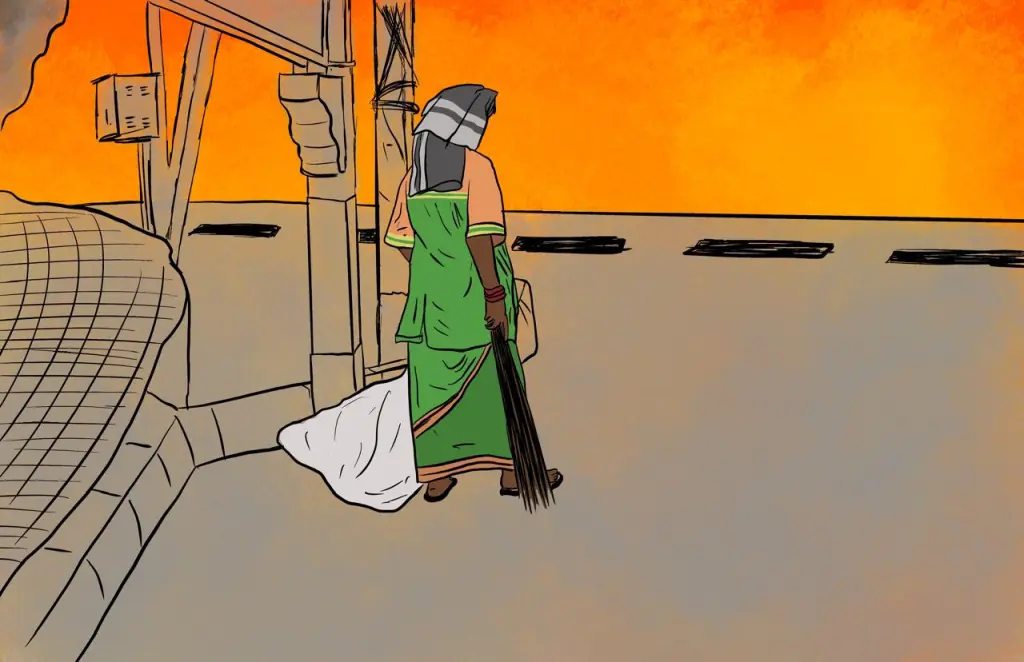
Part 1: Rising Heat and Unequal Impact This year India experienced one of the longest heat waves ever recorded. According to the Indian Meteorological Department (IMD) Chief, this has been the longest spell because it has been going on for about 24 days in different parts of the country. The extreme temperatures experienced throughout the country made heatwaves a trending news topic with multiple discussions on the prevailing abnormal conditions as a consequence and impact of climate change. One of the consequences highlighted was that extreme heat and heatwaves in India shall no longer remain contained over only those regions traditionally believed to be prone. This follows the Intergovernmental Panel on Climate Change (IPCC) reports and analysis that showcases that newer areas, especially from the southern peninsular India, have started to experience heatwaves.
This year, this impact was visible in cities like Bangalore, popularly known for its pleasant weather conditions experiencing extreme heat conditions. Although Karnataka does not fall under Core Heatwave Zones (CHZ), which includes the states most prone to heatwaves, the IMD had issued a circular on April 4, 2024, warning that Karnataka will experience heatwave-like conditions for the coming days. The city of Bengaluru also recorded temperatures going up to 36.5°C in this month which technically does not amount to a heat wave, but the high temperatures deviated from the city’s mean daily maximum temperature of 34°C for April.
Today, as we enter into the monsoon period, people of the city experience the much-awaited relief from showers after a rainless April month – something that Bangalore hasn’t seen in the last 123 years, according to IMD Bengaluru Director N Puviarasan. However, despite the recent respite, in this article, we shift our focus back to the impact of the relentless heat experienced in the months of April and May that took a toll on the daily life of people in the city. Heat waves have been able to bring to the forefront how the adverse effects of climate change are being experienced by all in our everyday lives, however, the impact still remains unequal, especially for workers exposed to heat. In this article, we revisit and highlight this disproportionate impact of excessive heat on one such category of workers who are part of the climate mitigation workforce i.e. the people who work in the waste management sector.
Even as temperatures rose abnormally to 41.8°C in May, informal outdoor workers, especially those working in the waste management system, have continued to work despite the scorching heat, maintaining the hygiene of the city. Thus, while talking about climate change and the impact it has on workers, we focus on the differential and disproportionate impact of extreme heat on the waste pickers and other informal waste workers in the city of Bangalore who are primarily involved in the collection and segregation of waste in the solid waste management sector.
“I have been living in bangalore for the last 45 years, never seen a summer like this,” said 40-year-old Kumuda, who has been working as a Operator at a Dry Waste Collection Centre (DWCC) in ward 177 of Bangalore for the past 8 years. The recent extreme temperatures have made their work even more challenging, as they struggle to cope with the heat while managing the waste.
Bangalore has more than 25,000 waste pickers employed or engaged in informal and semi-formal systems performing various roles in managing urban waste. Within this, there are several worker categories which include municipal sweepers or Pourakarmikas (PKs), operators that run DWCCs, scrap shop dealers/owners, wet waste collectors and helpers, waste sorters and free-roaming waste pickers. Amongst, the category of informal waste pickers are one of the most crucial groups of workers within the solid waste management chain and are crucial for ensuring proper collection, segregation, recycling and overall management of solid waste generated by the city of Bangalore.
Although championed for being at the forefront of climate mitigation efforts, and economically contributing towards circular economy as well as aiding municipal governance, waste pickers bear the unequal brunt of climate change impact such as extreme temperatures, both at work and at home. This is due to the nature of their everyday working conditions, inadequate housing set-ups and the underlying lack of recognition by the government’s regulatory and legal frameworks.
Part 2: Impact on Waste Workers’ Working Conditions
2.1 Outdoor workers: Informal Waste Pickers and Pourakarmikas
“Compared to last year, the temperature this year is the worst. We are not able to walk on the roads. We go for waste picking and tying some kind of cloth over our heads. That much the temperature is” said a free-roaming woman waste picker.
The majority of the free-roaming waste pickers in the city are women, who start their work in the early hours of the day. Their work hours range from 4 hours to 10 hours with most of them starting work at around 6 am in the morning and going on till 4 pm in the afternoon. This exposes them to the risk of heat stress during heat waves as they are working in the primary house from noon to 3 pm, when the sun is at its hottest.
Their work includes travelling by foot in and around nearby areas where they reside, picking and collecting valuable and recyclable waste like plastic bottles, paper cups, packets of food items etc, that amount to almost 8 to 10 kg of waste per day. They carry this collected waste in sacks that they carry/drag on their backs that are then collected and sold for a price at scrap shops, itinerant buyers or DWCCs. Given their nature of work, informal waste pickers cannot afford to stay indoors as suggested by government advisories which makes them susceptible to heat stress. This would also mean a loss of needed income for the day.
“We used to go longer routes for waste picking. But, this summer, we were not able to go far. We are not able to walk in the heat and collect the waste. Walking only is difficult in this heat. Because we couldn’t go far, we collected less waste than usual… And thats why, the income is less during summers”, said Indira, a 40-year-old free roaming waste picker and president of Bangalore Chapter of Thyajya Shramikha Sangha (TSS), the union of waste pickers.
The International Labour Organisation (ILO) predicts that by 2030, India will lose about 5.8% of daily working hours due to increasing temperatures. This is a significant challenge to the informal sector, particularly the free-roaming waste pickers whose livelihood is dependent on outdoor work. The impact of such increasing temperatures has already started affecting their work. During the discussion with the free-roaming waste pickers, many have mentioned about the changes that they made in the working hours to cope with the heat. “Nowadays, we go to waste picking early and come back home before it gets hot”, shared on waste picker.
“It is so difficult. sometimes I feel like..to leave all this and run away. Since last week, I was feeling like I didn’t even want this job…. It went to that extent….That much hot it is”, shared 30-year-old Nirosha, who is working as a Pourakarmika in Bangalore.
For Pourakarmikas, their primary work starts from 6.30 am in the morning and goes till 2 in the afternoon, working for long hours in the day. Due to this, they are exposed to excessive heat, and ultraviolet radiation as well as workplace air pollution. This prolonged exposure often leads to dehydration and heat-related illnesses. According to a recently published ILO report on ‘Ensuring Safety and Health at Work in a Changing Climate’, such exposure to excessive heat can lead to health impacts on workers such as heat stress, heat stroke, heat exhaustion, heat cramps, etc. “Recently, an older woman fainted due to low blood pressure,” said Nirosha. She also mentioned that many Pourakarmikas have fainted during work and have started feeling exhausted during work on hot days.
According to the same report, exposure to ultraviolet radiation and workplace air pollution further risks sunburn, weakened immune systems, cataract, skin-related diseases as well as respiratory and cardiovascular diseases. One of the waste pickers in her late 50s interviewed shared how she has stopped working as a waste picker and now looks after her children’s children at home due to developing an “eye problem”.
2.2 DWCC Workers: Navigating Work in the Heat
“In this heat, it is hard to work. I do feel an increase in temperature. If we say it was level 5 heat five years ago, now I would say level 6 or 7, which is making it hard to work,” said Leelavathi, a sorter working at ward 177 Dry Waste Collection Center for the past four years.
Waste sorters are workers who work in Dry waste collection centres (DWCC) or scrap shops to segregate the waste into different categories of dry waste such as plastic, metal, glass, paper, e-waste and other dry waste or reject waste. Sorters are usually employed by operators and owners of DWCCs and scrap shops. Their working hours range from 9 am to 6 pm where they sit amongst the heaps of unsegregated dry waste collected and sorted. Sometimes, due to poor design that leads to a lack of ventilation and a lack of electricity supply at the DWCCs contributes to heat-related risks for sorters at their workplace.
One sorter explained to us that, “since there is no fan in the Godown (DWCC), we are not working inside. it feels suffocating for us. And that’s why we put the waste outside the centre and sort there during summer. We cannot put a fan inside the godown, since there is no electricity.” According to one operator of a DWCC, these conditions also force sorters to work without provided protective gear like gloves and masks and uniforms risking them to other occupational health hazards.
Rising temperature has also impacted the amount of work they are able to do in one day. The working speed has decreased as workers feel more tired during work hours. “To work in this summer, it is very difficult for us. In the morning from 8 to 10, it is okay (tolerable) for us to work. After that, it gets very difficult. Then after 4 only, the temperature starts to decrease. But by then, what work we can do. It is time to go home. So, it is very hard in this summer,” shared one sorter. The discomfort and stress due to excessive heat has led DWCC sorters to take more frequent absences from work, reducing her income. “I am taking leaves, 1 or 2 or 3 days a week due to this heat, and hence the income of those days will be gone,” says Leelavathi.
Kumuda, the DWCC operator of Ward 177 explained to us that, “since there is no fan in the Godown (facility), we are not working inside. it feels suffocating for us. And that’s why we put the waste outside the centre and sort there during summer. We cannot put a fan inside the godown, because there is no electricity,” According to one operator of a DWCC, these conditions also force sorters to work without provided protective gear like gloves and masks and uniforms risking them to other occupational health hazards. Leelavathi notes, “I sweat, and I can’t wipe the sweat also. I have worn gloves; if I have to wipe sweat on my face, I have to remove gloves. These are all problems.”
The workers at the DWCC face several health related illnesses such as severe dehydration, fatigue, exhaustion and dizziness. “I fainted a few days back because of the heat. I don’t take medicines, I don’t like it. I take it only when it gets very worse (physical)”, said Halima, a sorter at Dry waste collection centre. One of the operators expressed how due to the impact of heat on the workers health and productivity, they are unable to sort and segregate waste at the same levels as they used to. “Before, we used to do 1 and a half tonnes. But now, to sort 1 tonne has become difficult. It is because of the heat. For the last two months, it has been like this.” Since most operators earn income by selling the segregated waste through which they also pay the salaries of the sorters working with them, the quantity of waste sorted is essential for their and their workers livelihood.
“During normal days, we used one or one and half cans per day. But, this summer, we used three cans of water which costs Rs30 per day” – Kumuda, DWCC operator of ward 177.
Some of the strategies used by sorters to combat the heat includes drinking more and more water to keep their bodies cool and hydrated which adds to their daily expenses as well. However, the unwanted consequence of this is that they don’t get hungry and skip on essential meals that are necessary for energy and nutrition. One of the DWCC operators explained to us that, “since they are drinking a lot of water, their food intake breaks. And because of that, they become tired and it impacts the work.” This is further leading to health risks where since they do not eat food at the correct time, they experience dizziness, weakness and have also experienced fainting, they further shared.
Existing Policy Frameworks For Heat and Climate Change: Informal Waste Pickers and Sorters as Missing Categories
Recently, the IMD Chief, Dr Mrutyunjay Mohapatra, shared how heatwaves will now become more frequent, durable and intense. This means that waste workers, amongst other informal and outdoor workers are expected to experience worsening working conditions that will impact their day to day livelihood and health further. This calls for a need for the government to recognise and respond to these challenges and take measures to protect and support waste worker’s well being.
Heat Action Plans (HAPs) and broader Climate Action Plans (CAPs) are one of the ways through which governments at various levels are preparing for extreme climate change-induced weather fluctuations and to lower the adverse impacts of extreme heat. We briefly discuss the provisions in the existing policy frameworks in addressing the issues of people engaged in the waste management sector.
Heat Action Plans: Missing the mark
HAPs outline strategies and measures to prepare for, address and recover from heat waves. Some of the combination of measures to combat extreme heat apart from early warning systems and awareness campaigns suggested by existing HAPs are building heat shelters and cooling centres, and providing clean drinking water to avoid dehydration for people. HAPs also include a ‘vulnerability assessment’ that prioritises the protection of vulnerable populations such as low-income communities, children and the elderly. The Karnataka State Heat Action Plan 2023-24 mentions that physical vulnerability could be due to age, pregnancy, chronic disease, type of housing, occupation etc. It also recommends that each city or town should do its own vulnerability assessment using available resources and robust scientific methods. However, the current framing of vulnerability generalises categories of vulnerable population and doesn’t take into account the varying needs of the population based on specific working conditions of their occupations, especially for informal outdoor workers who are disproportionately exposed to extreme heat conditions. Lack of targeted interventions leave many informal workers at large and especially waste pickers and waste sorters in particular excluded from such suggested measures. Additionally, HAPs remain advisory in nature and are in need of funding and legal accountability for proper implementation.
Bangalore Climate Action Plan: Concerns over Implementation
More specifically at the city level for Bangalore, in August 2021 the Bangalore Climate Action and Resilience Plan (BCAP), was undertaken by the BBMP with the support of the World Resources Institute (WRI) as the global consultant company to prepare a climate action plan 2050 for the city of Bangalore. At the time of writing this article, the full BCAP report is yet to be released. Last year, in November 2023, the BCAP summary report was released along with ‘BCAP Sector-Wise Action Recommendations’. Solid Waste Management (SWM) is one of the priority sectors under this report to combat climate change. In one of the sectoral action tracks, that is ‘SWM-1’, the main aim is to “divert waste from landfills and better segregation of waste at source”. Here, we discuss two sectoral sub-action tracks within the SWM-1 track that are relevant and crucial for the recognition of informal waste pickers and other waste workers and have direct implications on their working conditions in the context of extreme heat conditions.
One of the Sub Action Tracks – ‘SWM 1.9’ aims to create dignity of labour for pourakarmikas by introducing “legal status and a licensing mechanism for ragpickers and waste workers to formalise them and provide support to ensure social equity, informal inclusion, and job security.” Aligned with the Solid Waste Management Manual and BBMP Bye-Laws, it aims to have as an output the “recognition of pourakarmikas and list of formalised rag pickers”. This is a welcome vision by the BCAP that identifies BBMP-BSWML as the principal responsible agency to implement this.
However, given the advisory nature of such action tracks, beyond identifying the relevant authority and regulatory framework, the report doesn’t lay down the basis and the ways in which the municipal body will be creating this “list of formalised ragpickers”. The implementation outline is crucial because the majority of the waste pickers work in informal arrangements and an attempt at formalising them can disturb their existing informal networks within the recycling value chain, dispossessing people of their livelihoods and producing greater precarity for waste pickers. Therefore, clarification on what is envisioned by ‘formalisation’ and detailing the scope of eligibility and the entitled benefits for informal waste pickers who will be included in the list of formalised ragpickers will be crucial for effective implementation of this sub-action track. This is especially important since the report lays down an ambitious overall sectoral target of achieving “100% segregation of waste by 2025” which is a welcome goal. However, one of the consequences of such a target is the direct impact on the livelihood of informal waste pickers and other waste workers in the city. Currently, existing attempts at formalising waste pickers through issuing occupational ID cards that entitles them to social security benefits are facing challenges such as renewal. Therefore it is imperative to detail the implementation and consequences of such attempts at formalisation of informal waste pickers.
Another Sub Action Track – ‘SWM 1.10’ aims to “develop and maintain mustering centres in every ward (preferable at the transfer stations) across the city (including necessary facilities such as proper toilets, water, soap, or sanitiser) for pourakarmikas and rag pickers, to ensure better working conditions and improved public health.” This is a grounded approach that takes into account the nature of work of waste pickers and aims to improve their working conditions. However, it is imperative to have proper monitoring and management of these mustering centres that ensures that the proposed facilities are functioning and that there is no exclusion or harassment of informal waste pickers using the services. Currently, the formalised municipal sweepers, Pourakarmikas although assigned, are unable to use basic sanitation services like toilets in existing infrastructure like schools, anganwadis etc and demand the building of restrooms in mustering points. This highlights the need to further plan and implement the proper provisioning, and management of basic services through such an action plan for the wellbeing of waste pickers.
Recommendations:
“Even if it’s hot, even if it rains….we have to go…even if one day we don’t go to work…we won’t get food” shares one waste picker.
Given the challenges about the everyday working conditions of informal waste workers, we recommend the following policy and regulatory as well as immediate workplace suggestions to help waste workers adapt to the rising heat.
Policy Level:
Prioritising the targeted inclusion of informal workers based on occupation, especially for waste workers like waste pickers and sorters within existing policy frameworks, especially Heat Action Plans and Climate Action Plans. The existing and upcoming policies regarding heat and broader climate vulnerability assessments should have an expanded definition and immediate recognition of waste workers and especially informal waste pickers and sorters.
For example, at the state level, conducting a vulnerability assessment of the waste pickers community under the Karnataka State Heat Action Plan 2023-24 recommends the method of a “case-control study in a community or a workplace to identify the most vulnerable population and the risk factors of being vulnerable”. Within this waste pickers community can be recognised and prioritised as a vulnerable population based on both the occupational status and the type of housing they reside in along with their socio-economic status and identity.
At the city level of Bangalore, BCAP Sectoral Action Tracks need to be implemented via projects undertaken through collaboration between government bodies and knowledge partners organisations. In this context, stakeholder consultations under the proposed Bangalore Climate Action Cell should include waste picker organisations and waste pickers representation to ensure that projects that are taken up to implement the suggested action tracks are cognisant of existing challenges such as formalisation and how to prioritise the welfare of waste workers in the context of rising heat.
In addition to heat and climate action plans, waste workers should be eligible to avail of expanded and free access to local public healthcare facilities for immediate relief from any heat-related issue.
Immediate Relief Measures During Work:
Waste pickers and other waste workers should be provided access to clean drinking water and hygienic sanitation facilities. Given the challenges with existing public sanitation facilities and mustering points, this should be a high priority for the municipal body while implementing the BCAP action tracks.
Waste pickers and other waste workers should be provided with ORS, buttermilk and other hydrating liquids or free access to the same at government-run spaces, especially during summer months.
Adequate provisioning of resting areas for waste workers in public or government-run and accessible spaces. The recent extension of open hours of public parks in Bangalore is a welcome step in the same direction, however, there are challenges in its implementation.
Changing the fabric of uniforms for municipal workers to allow for ease of movement, and comfort for work during hot hours.
Acknowledgements
We extend our gratitude to the following individuals for their invaluable contributions:
Illustrations by Geetanjali
Waste Workers:
Nirosha
Kumuda
Indira
Leelavathi
Halima
Hasiru Dala Staff:
Gowtham
Pavan
Sneha
Praveen
Nalini
Bianca
Their insights, support, and dedication have been instrumental in developing this article. Together, we strive to amplify the voices of waste workers and discuss the challenges faced by waste pickers.
This blog was initially published on the Hasiru Dala website here.
Related Content
Breaking Point: Heat and the Garment Floor
This report by HeatWatch in collaboration with the Tata Institute of Social Sciences, Mumbai, is based on our research with 115 garment factory workers in Tamil Nadu and Delhi and interviews with factory management across 15 garment and textile units in Tiruppur in Tamil Nadu, Faridabad and Noida in Delhi-NCR, and Surat in Gujarat to establish a baseline of physical infrastructure, operational policies, and health and safety systems.
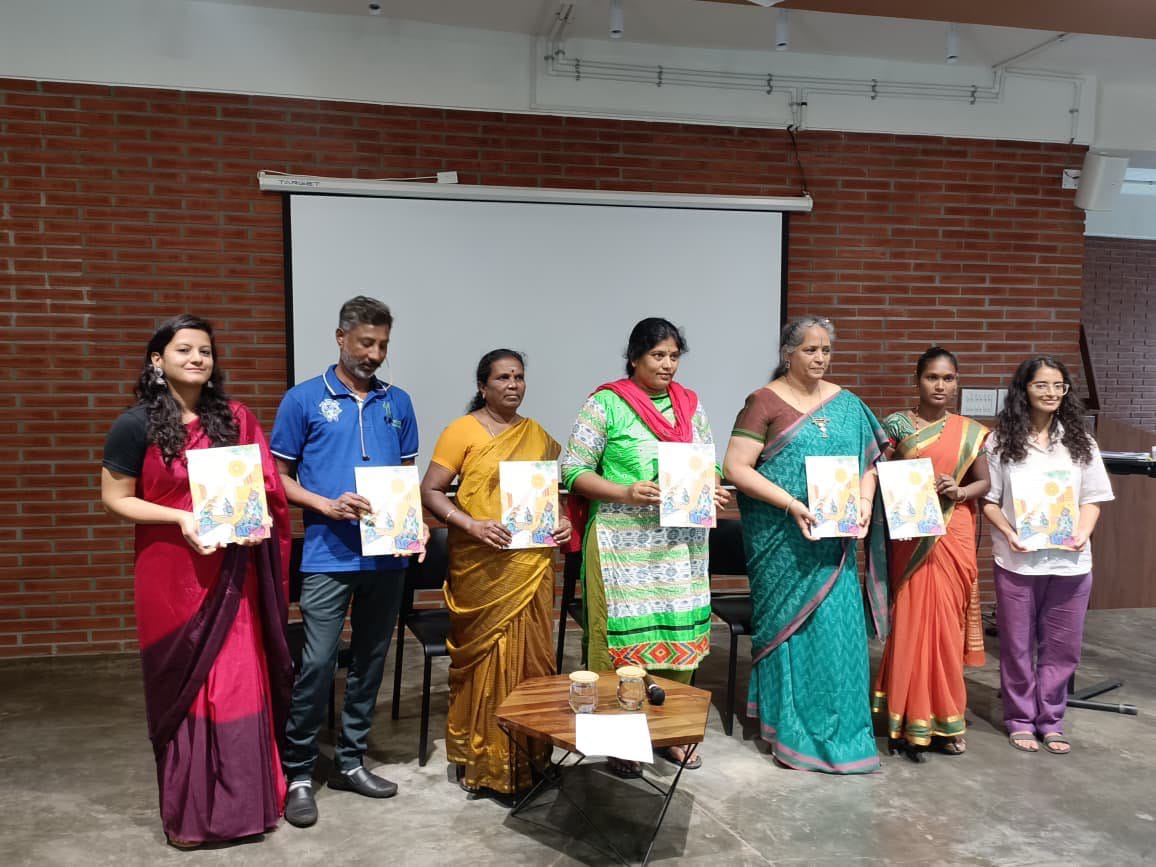
Rising Heat and Waste Workers: Impact of Heat Stress on the Livelihood and Health of Waste Workers in Bengaluru
Heatwatch and Hasiru Dala have launched a new report exploring the growing threat of extreme heat in Bengaluru and its disproportionate impact on waste workers.
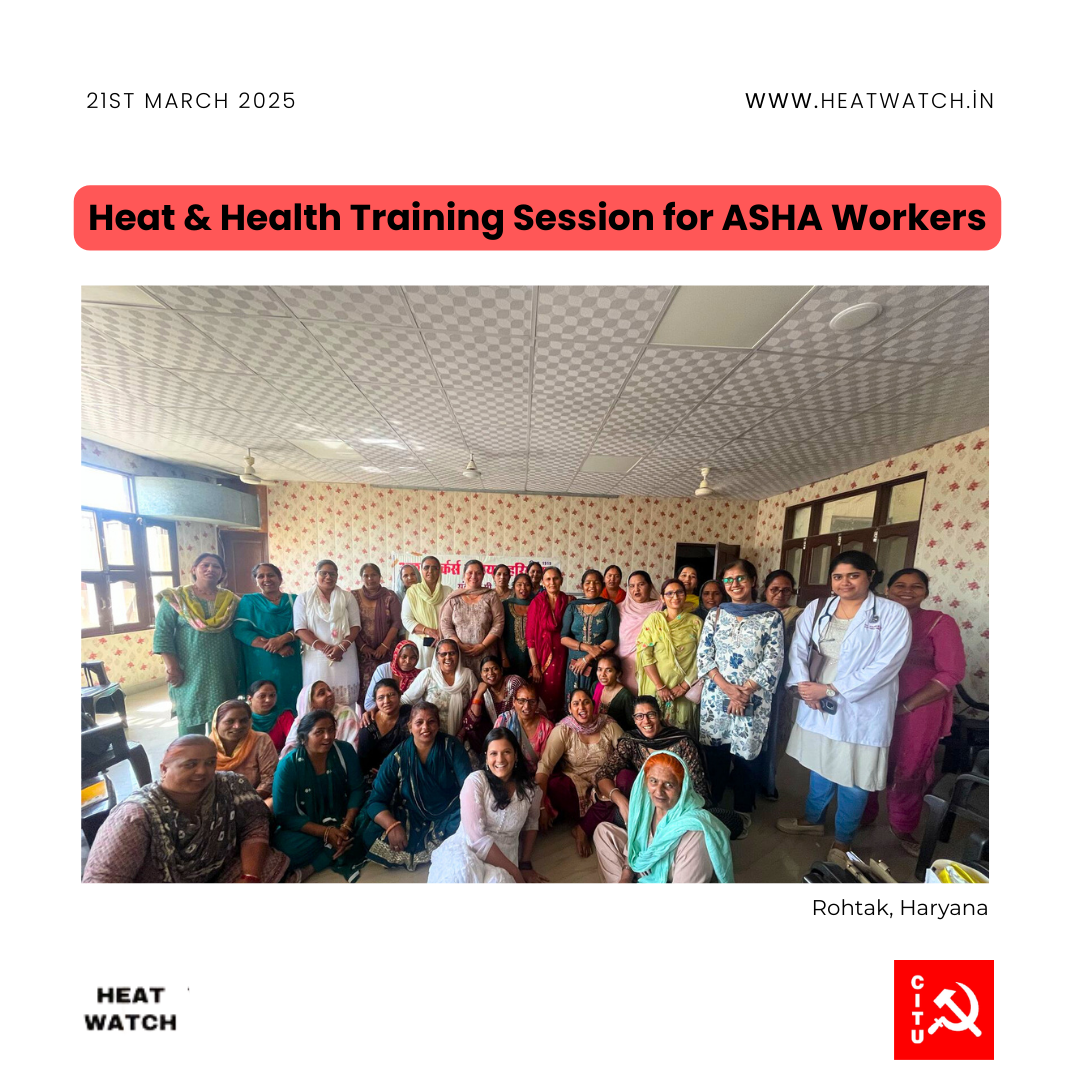
PRESS RELEASE: HeatWatch & CITU Haryana Train ASHA Workers in Rohtak on Heat & Health Preparedness
HeatWatch and Centre of Indian Trade Unions (CITU) Haryana Organise Heat and Health Awareness Training for ASHA Workers in Rohtak on March 20, 2025