
Blog & Updates
Heat waves as notified disaster - comprehensive solution or a first step?
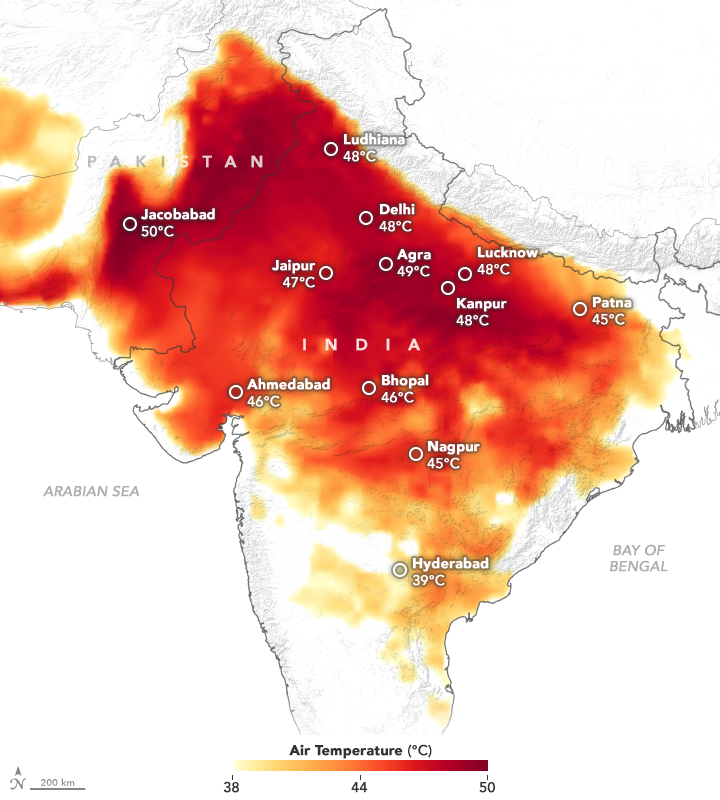
The Disaster Management Act 2005 does not recognise heat waves as a disaster. This blog explores what would change if heat waves were notified as a disaster and why this is just the first step in climate-focused adaptation for a dangerously hot country.
First, what is the Disaster Management Act? The Government of India passed the 2005 Disaster Management Act in response to severe disasters like the 1999 Odisha super cyclone, the 2001 Gujarat earthquake and the 2004 tsunami. The purpose of the Act was to ensure effective disaster management in India incorporating mitigation, adaptation, rescue operations and other relevant measures. The DM Act presently recognises the following as disasters: cyclones, droughts, earthquakes, fires, floods, tsunamis, hailstorms, landslides, avalanches, cloudbursts, pest attacks, frost and cold waves. However, heat waves, a growing threat in India, are not recognised as a notified disaster.
Why is this notification important?
Under the DM Act, states can request financial support from the National Disaster Response Fund (NDRF). Without government recognition of heat waves as a notified disaster, states have to rely on their resources or the State Disaster Response Funds (SDRF) to mitigate risks.
The 15th Finance Commission did not find strong reasons to include heat waves as a notified disaster in the DM Act. Instead, it reinforced that states can use 10% of their SDRF for executing mitigation and adaptation strategies for local disasters such as heat waves, lightning, etc. So far, four states — Haryana, Uttar Pradesh, Odisha, and Kerala — have included heat waves as local disasters.
In case heatwaves become a notified disaster, states could seek funding from either the SDRF or the NDRF to execute a wider range of activities which would not have been possible earlier. The government would also have to provide monetary compensation of Rs 4 lakh for every death due to extreme heat waves.
However, multiple challenges would continue to persist even after the notification. Here’s more:
1. The hot debate: definition of heat waves The Indian Meteorological Department (IMD) defines heat waves as periods of unusually high temperatures compared to the average temperature climatology of that region. The IMD declares a particular weather event as a heat wave if the maximum temperature touches at least 40°C in the plains, 37°C in coastal regions, and 30°C in hilly areas. The extent of deviation from the place's average temperature determines the intensity of a heat wave. If the deviation is an increase of 4.5-6.4°C, it is a 'normal' heat wave. If the deviation is an increase that exceeds 6.4°C, it is a 'severe heatwave'.
Unfortunately, the IMD does not calculate the wet-bulb temperatures or include other meteorological factors such as humidity, wind speed, or solar radiation in its definition of heat waves.
Why are wet-bulb temperatures important?
Measurement of wet-bulb temperatures (WBT) includes air temperature and other factors like humidity levels and intensity of sunlight to provide a nearly accurate measure of how high temperatures combined with other environmental factors would impact the human body.
WBT also indicates to what extent a human body can cool itself from sweating. For instance, when the WBT exceeds its upper limit of 35°C with a relative humidity of 75%, the situation becomes dangerous as the human body can no longer rely on sweating to cool itself, causing heat strokes and even death. For example, during the May 2015 heat waves in India, temperatures rose to 47.2°C in many coastal areas. Such high temperatures combined with increased humidity killed at least 2,300 people in Andhra Pradesh, Telangana and Odisha.
Coastal cities in India repeatedly hit these wet bulb temperatures which is why excluding WBT in heatwave definitions could give the public a lopsided understanding of the situation
2. A curious case: heat stroke deaths
11,868 people died to heat strokes in India from 2012-2022, according to National Crimes Record Bureau (NCRD) data collated by HeatWatch. However, the real numbers could be much higher.
A heat stroke is a potentially fatal situation that occurs when the human body temperature increases to 40° C, i.e., 104° F or more and conditions like seizures, coma or delirium become apparent, according to NDMA. A heat stroke arises from prolonged exposure to high temperatures when the body loses its natural ability to regulate internal temperatures to cool down. However, the way heat impacts a human body varies across factors like age, gender, and living conditions, making it difficult to establish heat as a direct cause of death
The 2024 guidelines shared by the Union Health Ministry state that an individual's death can be attributed to heat stroke only when the death is directly caused by excessive heat or when heat is a direct factor in exacerbating an existing health condition leading to death. The guidelines establish certain criteria for medical officers to attribute deaths to heat stroke such as the body temperature at the time of collapse, conditions of internal organs and surrounding environmental conditions.
However, the situation gets complicated in rural areas because of poor concentration of healthcare services. By the time people affected by extreme heat access medical services, doctors find it challenging to ascertain the cause according to the criteria mentioned in the guidelines. Moreover, in most cases, doctors do not recognise heat as a cause of death and attribute deaths to underlying pre-existing medical conditions such as cardiovascular issues.
The guidelines also suggest collecting blood, vitreous and urine samples for tests to determine the cause of death. For example, if the urine of the deceased contains myoglobin or if the vitreous fluid contains high sodium and chloride levels, then it's a definitive sign of heatstroke. But many hospitals across India lack important facilities and trained personnel with forensic expertise to conduct detailed laboratory tests for an effective post-mortem. Many doctors are not aware of the existence of such guidelines to identify and certify heat-related deaths.
To tackle this, healthcare professionals must undergo specific heat-related training. Additionally, heat-focussed departments and wards should be created in PHCs and UPHCs in small towns and villages along with metro cities. Mobile health services should continuously run across remote areas, construction areas, factories and anganwadis. Regular orientation programmes and awareness workshops should be conducted for medical professionals and doctors to this effect.
3. Too many cooks: multiple organisations and lack of administrative clarity
Currently, multiple organisations such as the Indian Meteorological Department (IMD), National Crime Records Bureau (NCRB), Ministry of Health and Family Welfare (MoHFW), EnviStats Report and other state departments collect, and report data related to deaths from extreme heat. This leads to many inconsistencies in the data collected on heat-related deaths in India. For example, in the 2010 Ahmedabad heatwave over 800 lives were lost due to heatstroke. However, the National Crime Records Bureau (NCRB) reported only a mere 58 deaths.
There is also a dearth of data when it comes to maintaining records of outdoor temperatures and reports of deceased patients and family statements. In most cases, officials in the health care system are advised r not to label deaths as heat-related to avoid complicated bureaucratic and legal processes.
4. Cash short: Insufficient budget allocation on disaster mitigation or adaptation
Recently, iForest conducted a study analysing Heat Action Plans (HAP) for nine cities and five districts. The Indian Government has created HAPs as guidelines in the interest of public health. These outline steps to mitigate and respond to the impact of extreme heat. HAPs include provisions such as improved access to cooling facilities, clean drinking water, rehydration solutions, hygienic toilets, medical care, health insurance, and mandatory paid breaks during peak hours especially for outdoor workers.
The iForest findings revealed that the HAPs lack a detailed assessment of the impact of extreme heat on local populations. Out of nine cities, only four cities had identified and mapped hotspots. Another study by CPR India explored 37 HAPs and found that a mere 5% of HAPs had vulnerability assessment, 30% discussed funding mechanisms, and only 41% had processes for regular review. The leading cause lies in severe underfunding and the absence of a robust legal framework. Local governments are left to source their funding to implement HAPs. Without financial and legal support, HAPs fail to take off.
Furthermore, HAPs are usually implemented when there's surmounting pressure from the public or the media or if local officials push for it. A case in point is Delhi's HAP, drafted in 2023 but implemented much later during the 2024 severe heatwave that drew much media attention and public concern. While it led the government to take some action, it was not a proactive measure but rather a reactionary one. Currently, HAPs are also not integrated with existing policies which creates roadblocks in access to capacity, resources, and finances.
Will the notification of heat waves as a disaster solve all our problems?
Yes and no. It will be a big step towards recognising heat waves as an emergency that disproportionately impacts low-income populations. But the notification of heatwaves as a disaster might not automatically lead to a revision in the definition of what is a heatwave, might not improve our public healthcare system and thus, will not immediately prevent heatstroke deaths.
So what needs to change?
A much-needed change would be stopping all kinds of outdoor work during soaring temperatures while enabling social protectio measures to secure livelihoods. Heat awareness training sessions by medical professionals should become mandatory to create public awareness among vulnerable groups. Efficient, hyper-local early warning systems would need to be established with inter-agency collaboration that would prepare at-risk groups to stay safe during extreme heat waves. Local bodies would be required to implement infrastructure development and urban planning strategies such as urban greening, heat-resilient cooling roofs, covered infrastructure for shade, cool water facilities and community rest spaces with cooling and seating facilities.
While HAPs already include these measures, it is important to recognise their limitations. There is a lack of funding mechanisms and administrative clarity on how to implement these processes effectively.
Furthermore, while the National Disaster Management Authority has provided HAP guidelines, the need of the hour would be to implement codified conduct by the concerned agencies and affected communities involved. This would include a common heat code that would lay down a clear definition of heat waves with respect to wet bulb temperatures as well as the next steps to be taken to mitigate the risks.
Thus, the notification of disaster for heatwaves needs to be supplemented in multiple ways - by incorporating a common heat code, expanding budget allocation, clarifying definitions and administrative structures, and preparing the public health system to deal with heat strokes and heat-related illnesses.
Related Content

Can heat action plans prepare India for intense heatwaves?
Read the full reflections and insights from our team.

Data: Heatwave kills in India, but agencies can't agree on numbers, methodology
Read the full reflections and insights from our team.
Breaking Point: Heat and the Garment Floor
This report by HeatWatch in collaboration with the Tata Institute of Social Sciences, Mumbai, is based on our research with 115 garment factory workers in Tamil Nadu and Delhi and interviews with factory management across 15 garment and textile units in Tiruppur in Tamil Nadu, Faridabad and Noida in Delhi-NCR, and Surat in Gujarat to establish a baseline of physical infrastructure, operational policies, and health and safety systems.