
Report
On Call in a Burning City: How Extreme Heat Is Reshaping Women’s Platform Work in Delhi NCR
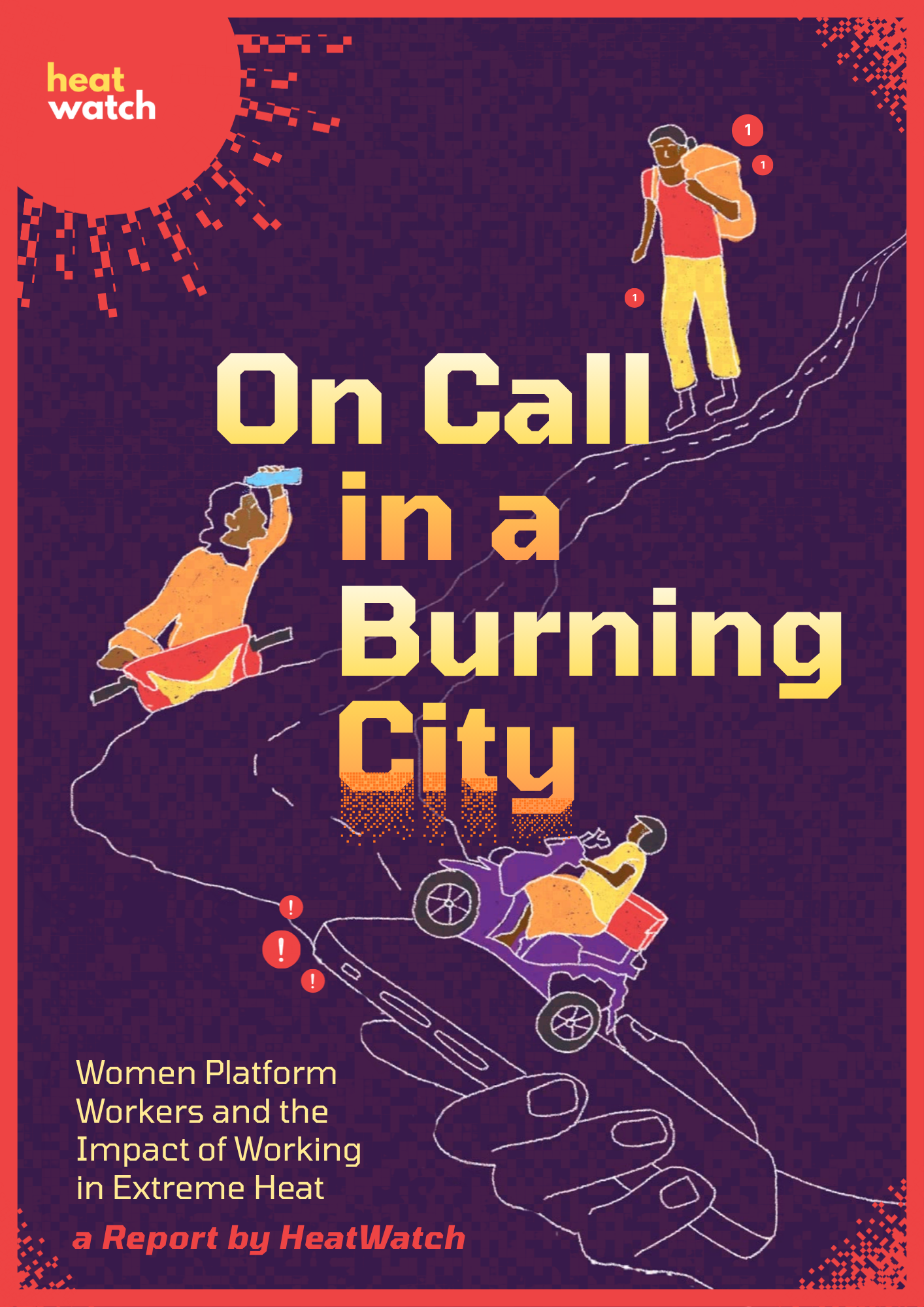
As Delhi’s summers grow longer, hotter, and more hazardous, women platform workers are being pushed to absorb the costs of extreme heat with little institutional protection. HeatWatch’s new report, On Call in a Burning City, shows that for women in beauty services, domestic work, food delivery, e-commerce, and ride-hailing, heat is not just a climate issue. It is a labour rights, gender, health, and urban infrastructure crisis.
Key Takeaways
71% of surveyed women worked all seven days of the week during summer.
65% had only one break or none during the working day.
86% self-reported at least one heat-related health challenge.
77% reported tiredness or weakness, 74% headaches, 63% dizziness, 57% dehydration or extreme thirst, 47% nausea or vomiting, and 36% fainting or feeling faint.
73% experienced these symptoms at least once or twice a week, including 40% who faced them every day.
Only 18% sought treatment from a doctor, clinic, or hospital, which means 82% received no formal medical care.
69% reduced or stopped work because of heat-related illness.
71% reported a fall in income during summer.
89% reported borrowing, delaying payments, or cutting household expenditure to cope with summer-related financial pressure.
74% received no heatwave-related support from their platform.
Background
The report draws on consultations with researchers, practitioners, and worker representatives, a baseline survey of 26 women before peak summer, a focus group discussion with beauty-platform workers, and a summer survey of 100 women across Delhi-NCR. It captures heat exposure across the full working day, including travel between jobs, waiting for bookings, carrying equipment, and working inside customers’ homes where ventilation, water, cooling, and toilet access are uncertain.
The findings make clear that platform work is far less flexible than it appears. App-based systems of booking allocation, ratings, incentives, cancellation rules, and customer expectations restrict workers’ ability to slow down, take a break, reject a distant task, or stop when they feel unwell. Basic facilities are also frequently unavailable: 27% said clean drinking water was hardly ever or never available, 43% said the same for toilets, 48% for rest spaces, and 51% for shaded seating.
For women, these risks are compounded by gendered harms. Many workers must navigate unsafe waiting spaces, limited access to toilets, customer misbehaviour, unpaid care responsibilities, and mandatory synthetic or dark uniforms that worsen sweating, discomfort, and skin irritation. The report argues that women platform workers are falling between two incomplete systems: heat policy that lacks enforceability and occupation-specific accountability, and platform-worker regulation that does not recognise heat as an occupational hazard.
Recommendations
Governments should:
Introduce a rebuttable presumption of employment for heat‑exposed platform workers
Create a gender‑disaggregated, dynamic registry and spatial mapping of women platform workers under CoSS
Recognise heat as an enforceable occupational hazard, monitored by wet‑bulb temperature
Expand state‑run social security and insurance for platform workers and prepare the health system for heat illness
Mandate algorithmic transparency with a gender lens and human oversight
Make women platform workers visible in e‑Shram and welfare‑board governance
Establish gender‑sensitive platform‑worker rest hubs through a PPP model
Platforms should:
Recognise employment‑like responsibilities for heat‑exposed platform workers
Make gig allocation heat‑sensitive and end algorithmic pressure during heatwaves
Guarantee at least two paid, penalty‑free breaks per shift, plus short cooling breaks
Provide real heat protection and hydration beyond a cooling vest and water
Roll back “service in minutes” promises and reduce algorithmic time pressure
Read the report here
Related Reports
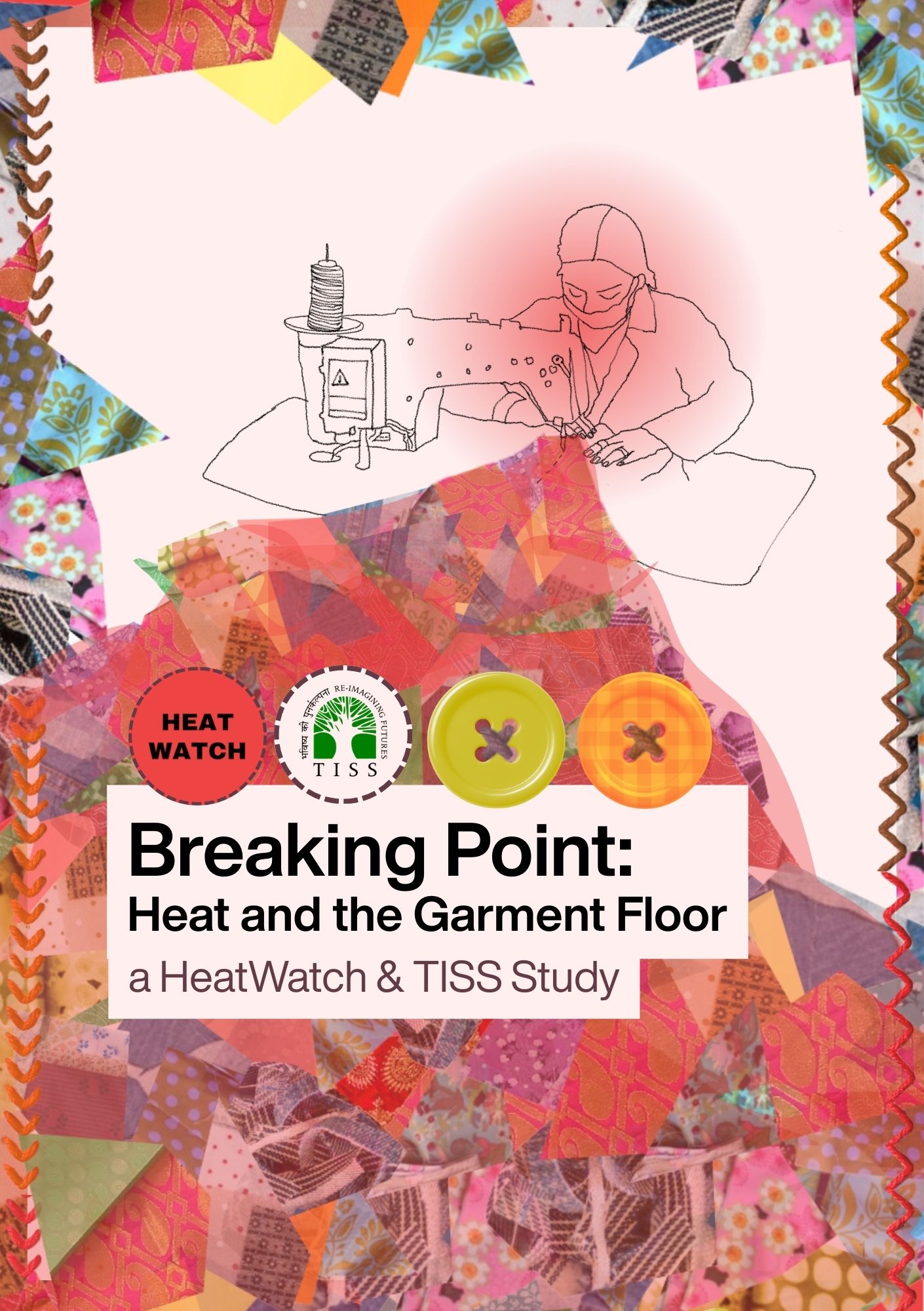
Breaking Point: Heat and the Garment Floor
This report by HeatWatch in collaboration with the Tata Institute of Social Sciences, Mumbai, is based on our research with 115 garment factory workers in Tamil Nadu and Delhi and interviews with factory management across 15 garment and textile units in Tiruppur in Tamil Nadu, Faridabad and Noida in Delhi-NCR, and Surat in Gujarat to establish a baseline of physical infrastructure, operational policies, and health and safety systems.

Rising Heat and Waste Workers: Impact of Heat Stress on the Livelihood and Health of Waste Workers in Bengaluru
Heatwatch and Hasiru Dala have launched a new report exploring the growing threat of extreme heat in Bengaluru and its disproportionate impact on waste workers.
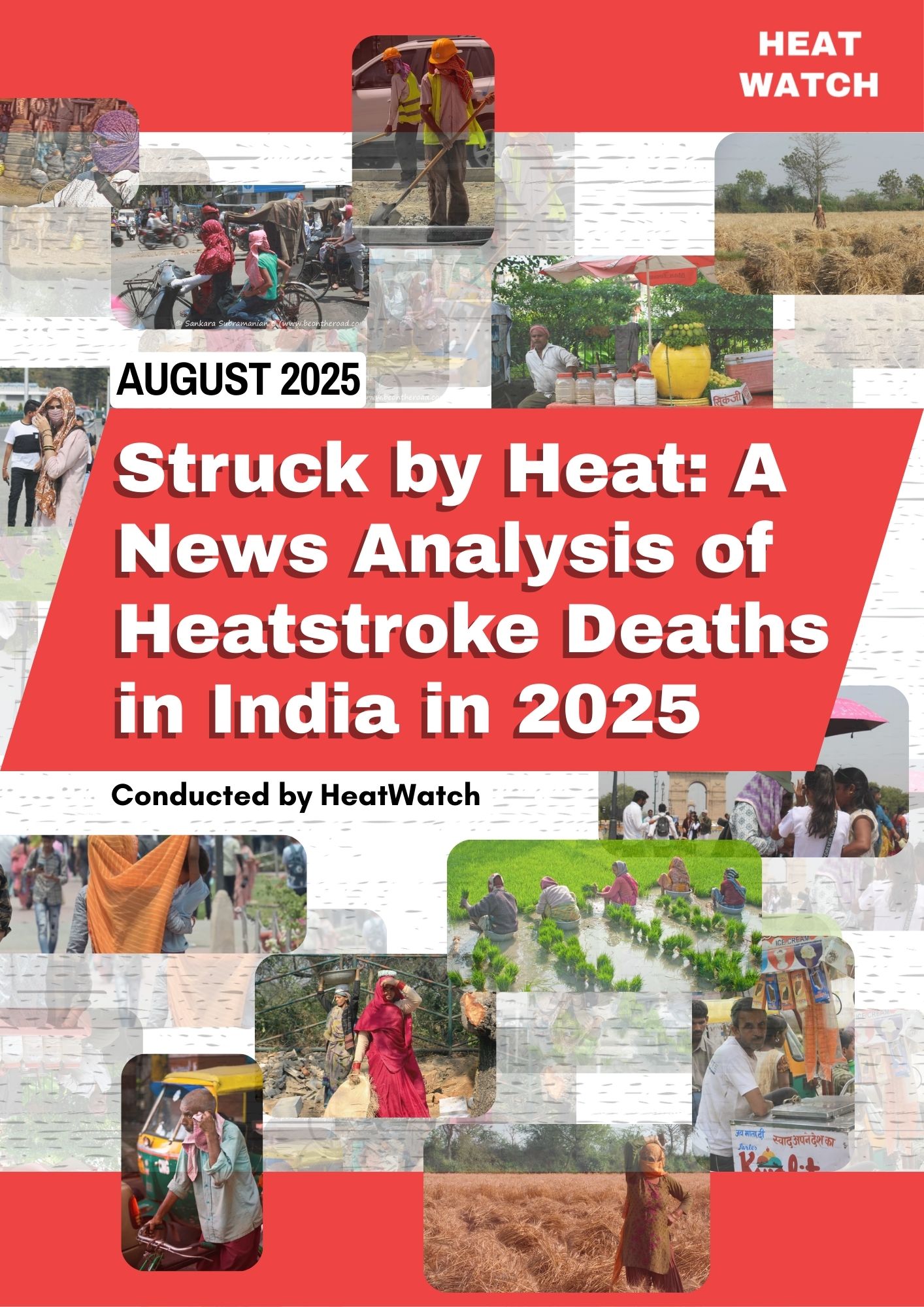
HeatWatch's 2025 Report Reveals Undercounted HeatStroke Deaths and Urgent Gaps in Public Health Response
In stark contrast to official figures reporting just 14 confirmed heat-related deaths in India between March and June 2025, this report documents 84 suspected heatstroke-related deaths. These findings were compiled from a systematic review of media reports across national and regional languages, using both AI-assisted searches and manual data collection to capture local coverage likely missed by government estimates.