
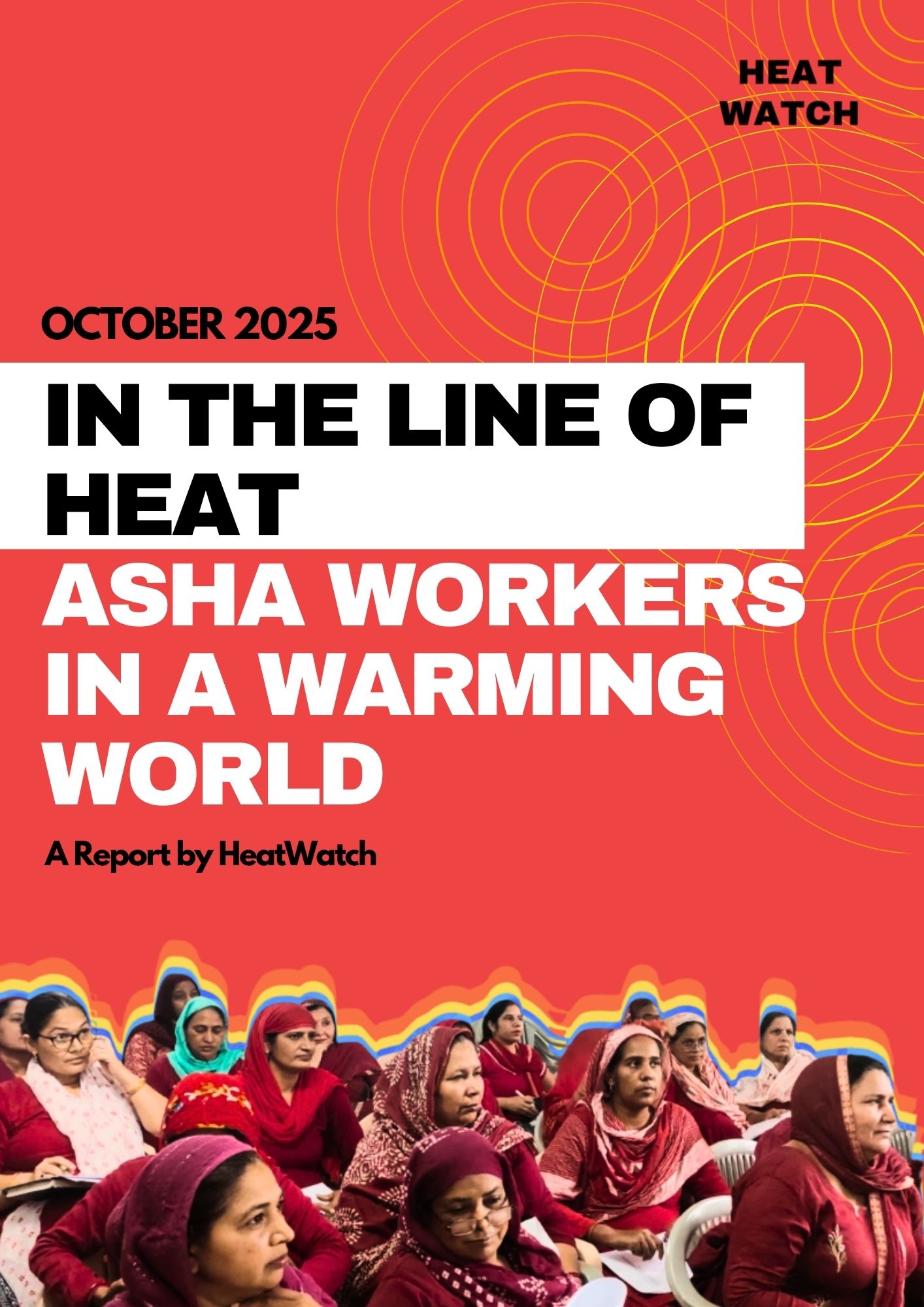
This report presents a comprehensive study on the effects of extreme heat on Accredited Social Health Activist (ASHA) workers in Haryana, exploring their work conditions, health challenges, and institutional support. Using a mixed method approach of a survey with 86 ASHA workers, complemented by in-depth interviews and field observations, the study reveals that heat exposure is not only a health risk but also amplifies the precarity and invisibility of one of India’s most essential yet undervalued healthcare workforce.
Read the report here
Key Findings:
Demographics and Workload: Most ASHA workers surveyed are experienced women (predominantly aged 30–60), working mainly in rural Sonepat and Rohtak districts. Nearly all cite ASHA work as their primary occupation, reflecting the central role these positions play in their economic lives, though earnings remain modest and inconsistent.
Heat Exposure and Coping: The majority spend 6–10 hours daily outdoors, with 83.7% exposed during peak heat hours. Walking is the primary means of transport, exacerbated by poor infrastructure. ASHAs frequently start earlier, take fewer breaks, or cut work hours during summer, but often at the cost of income or health. Only 37.2% reported access to drinking water, and a third lacked even basic workplace facilities.
Key Findings: Coping strategies are largely informal—using scarves for shade or relying on goodwill for rest and hydration—signaling a profound lack of institutional support.
Health Impacts: High percentages reported dehydration (68%), exhaustion (67%), and gastrointestinal or skin problems (55%). A striking 23% reported outright heat stroke. Mental health impacts, although not formally surveyed, were noted in voluntary responses. Heat worsens menstruation and reproductive tract infections, while inadequate health facilities and fear of income loss further deter care-seeking.
Economic Strain: Over 80% face increased expenses in food, water, electricity, and heat-related medical costs in summer; nearly 40% spend more than ₹2,000 per month treating heat-related issues. Reduced work hours—due to the double burden of household and paid work—compound financial instability.
Institutional Gaps and Worker Demands: There are pervasive shortfalls in cooling infrastructure, drinking water, clean toilets, shade, and rest spaces. Nearly two-thirds of ASHA workers demand improvements in these areas. Long-term recommendations overwhelmingly stress fair wages, green spaces, healthcare access, insurance, social security, and meaningful participation in planning that affects their work and health.
Structural Barriers and Call for Change: Testimonies reveal informal and documented work going unpaid, delays and opacity in digital payment systems, gendered disrespect, and intimidation for dissent. The “volunteer” status is a myth in practice, as refusing tasks brings threats of dismissal. Core demands include fixed and fair honoraria, regularized employment, maternity and medical leave, infrastructure upgrades in PHCs, and critical climate adaptation measures.
This research exposes how climate-linked heat is a force multiplier of structural neglect already faced by ASHA workers. Immediate and long-term, worker-led reforms in compensation, workplace rights, infrastructure, and policy are imperative for safeguarding the health and dignity of community health workers and for enabling an effective, equitable public health response in a warming climate.
Read the report here.
Related Reports
On Call in a Burning City: How Extreme Heat Is Reshaping Women’s Platform Work in Delhi NCR
HeatWatch's latest report explores how extreme heat is affecting the health, livelihoods, and working conditions of women platform workers in Delhi NCR, and why heat must be recognised as a labour, gender, and public health issue.
Breaking Point: Heat and the Garment Floor
This report by HeatWatch in collaboration with the Tata Institute of Social Sciences, Mumbai, is based on our research with 115 garment factory workers in Tamil Nadu and Delhi and interviews with factory management across 15 garment and textile units in Tiruppur in Tamil Nadu, Faridabad and Noida in Delhi-NCR, and Surat in Gujarat to establish a baseline of physical infrastructure, operational policies, and health and safety systems.

Rising Heat and Waste Workers: Impact of Heat Stress on the Livelihood and Health of Waste Workers in Bengaluru
Heatwatch and Hasiru Dala have launched a new report exploring the growing threat of extreme heat in Bengaluru and its disproportionate impact on waste workers.